Last Sunday morning, I woke up earlier than I wanted to. The house was quiet, and it was the kind of morning where I didn’t really feel like doing much. I opened the fridge, saw the eggs and milk, and somehow ended up making French toast.
It reminded me of the way my mom used to make it. Nothing fancy. No recipe card sitting on the counter, no carefully planned breakfast. Just eggs, milk, bread, and whatever else was around.
That’s still pretty much how I make it.
French toast is one of those breakfasts that looks like it should be more complicated than it is. It really isn’t. One bowl, one skillet, and a handful of ingredients. I’ve burned a slice or two over the years, to be fair, but even the darker ones usually disappear once there’s maple syrup involved.
Why I keep coming back to this
It’s quick enough for a normal morning.
The ingredients are simple, and I usually have most of them already.
The outside gets lightly golden while the middle stays soft. That’s the part I like most.
And nobody really needs convincing to eat French toast. Kids like it, adults like it, and you can change the toppings depending on what you have.
Mostly, though, it just feels like breakfast at home.
Ingredients
- 4 large eggs
- 3/4 cup whole milk
- 1/4 cup granulated sugar
- 1/2 teaspoon ground cinnamon
- 2 teaspoons vanilla extract
- 8 slices thick-cut bread
- 2 tablespoons butter, plus more as needed for the pan
What kind of bread works best?
Thick-cut white bread works just fine. That’s usually the easiest option.
Brioche or challah makes a richer French toast and holds up nicely to the egg mixture. Slightly stale bread is actually better than very fresh bread because it can absorb the mixture without becoming too soft.
Croissants work, too, although they’re more delicate and can get messy in the skillet. I save those for mornings when I have a little more patience.
How I make it
1. Mix the egg mixture
Add the eggs, milk, sugar, cinnamon, and vanilla to a wide bowl.
Whisk everything together until the eggs are completely blended and the mixture looks fairly smooth. A little foam on top is fine.
If some cinnamon floats around instead of mixing in perfectly, don’t worry about it. It happens.
2. Heat the skillet
Place a large skillet or griddle over medium heat.
Add about 1/2 tablespoon of butter and let it melt. The butter should be melted and lightly sizzling, but it shouldn’t be turning dark brown.
Here’s the thing: high heat makes French toast look like it’s cooking faster, but the outside can brown before the middle has warmed through. Medium heat is much easier to work with.
3. Dip the bread
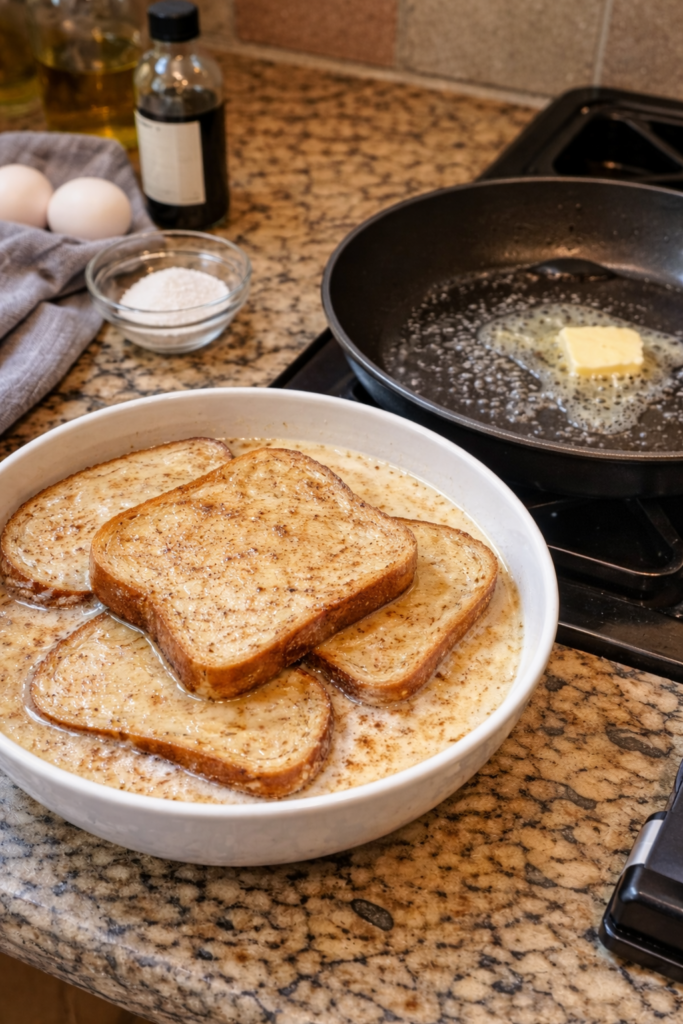
Take one slice of bread and dip it into the egg mixture.
Flip it so both sides are coated, then lift it out fairly quickly. For thick bread, about 5 to 10 seconds per side is usually enough.
You want the bread soaked through enough to become soft in the middle, but it should still hold its shape. If it starts feeling floppy when you pick it up, you’ve probably left it in too long.
4. Cook the French toast
Place the dipped bread in the hot skillet.
Cook for about 2 to 3 minutes on the first side, or until the bottom is golden brown. Flip and cook the other side for another 2 to 3 minutes.
The exact time depends on how thick your bread is and how hot your skillet runs. If the outside is getting dark before the center feels cooked, turn the heat down slightly.
Repeat with the remaining bread, adding another small amount of butter to the skillet between batches when needed.
5. Serve warm
Transfer the French toast to a plate and serve while it’s warm.
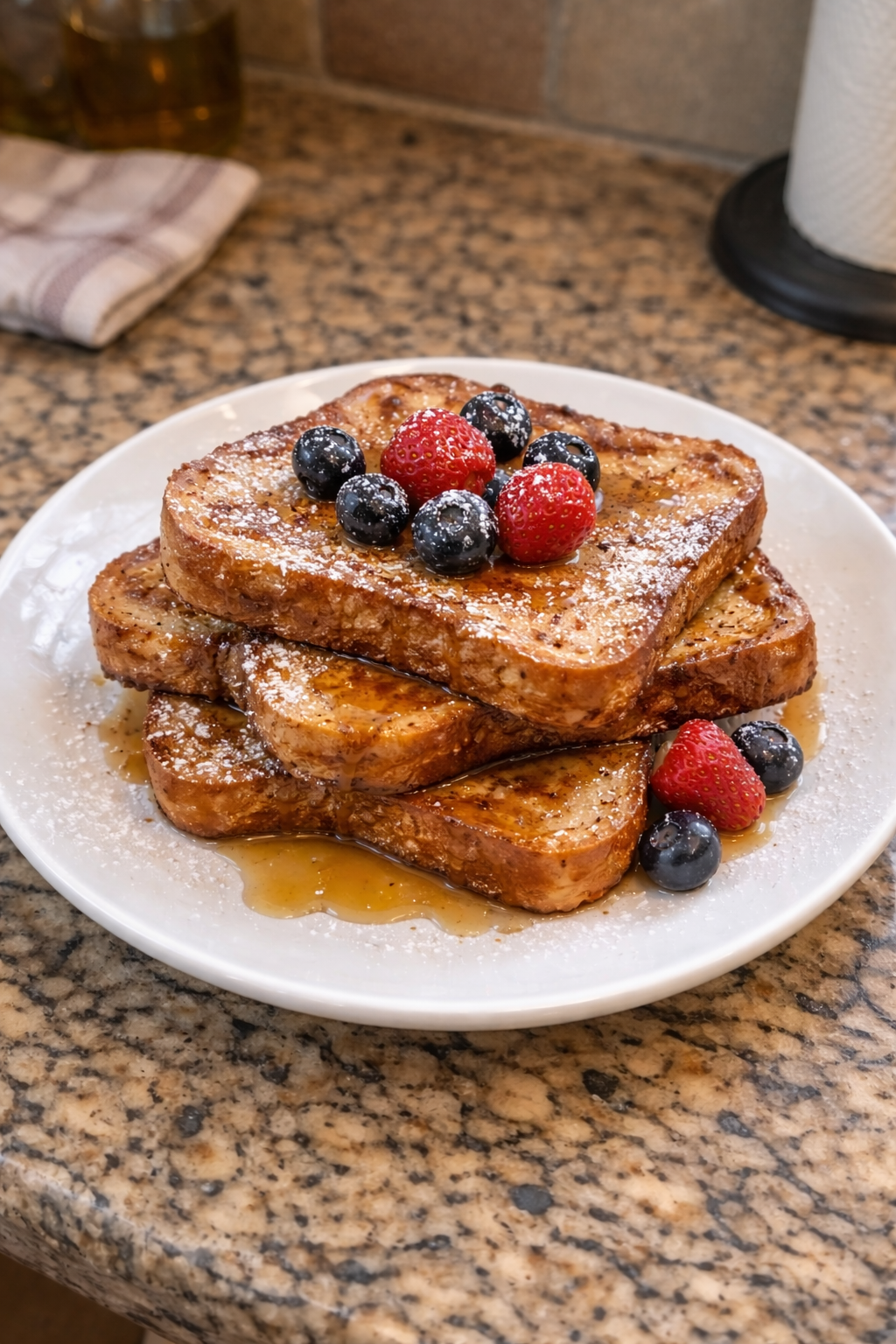
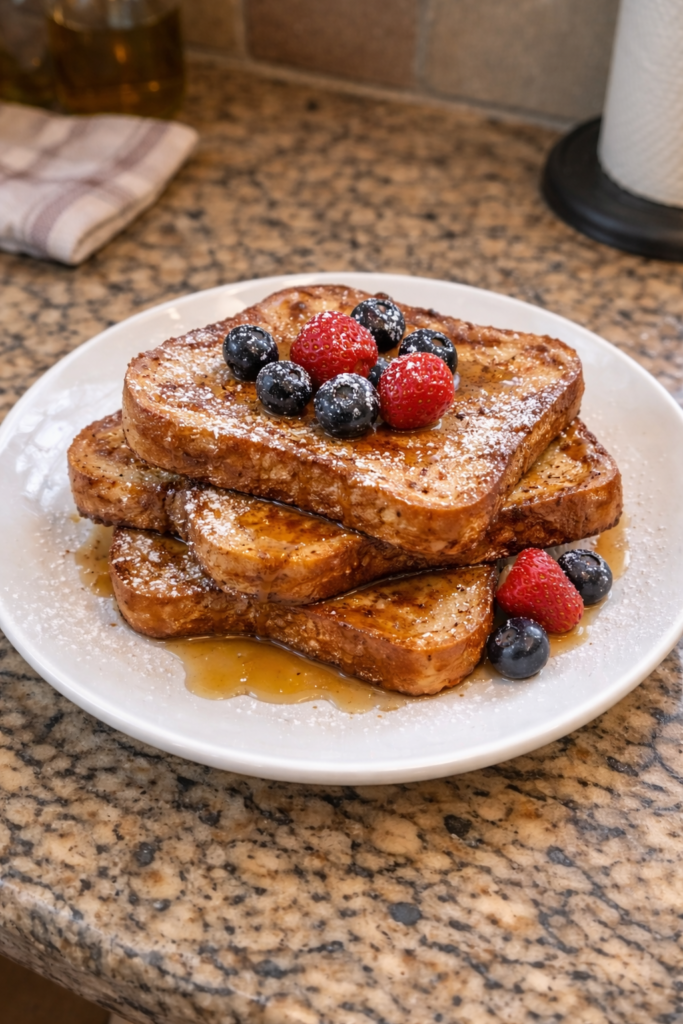
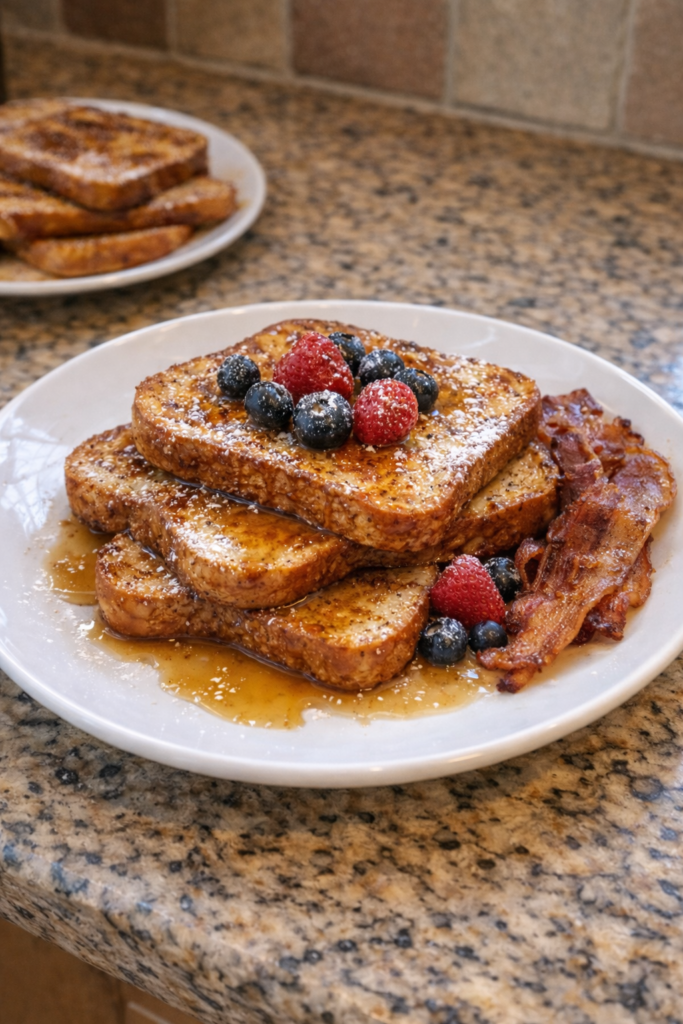
I usually go with maple syrup first. Powdered sugar is nice when I remember to grab it, and fresh berries are great when we have some around.
A few things I’ve learned
Use slightly stale bread if you can. Fresh, soft bread can soak up too much of the egg mixture and become soggy.
Don’t soak the bread forever. A quick dip is enough for most thick slices. Very thick or dry bread may need a little longer.
Keep the heat at medium. If the skillet is too hot, the outside can burn before the middle is properly cooked.
Whisk the eggs well. You don’t want little pieces of egg cooking separately on the bread.
Watch the butter. If the skillet gets dry, add a little more before the next batch. You don’t need to drown the bread in it.
Cook a test slice first if you’re unsure. This is actually a useful way to figure out whether your skillet is too hot or too cool before you’ve cooked the whole batch.
Easy ways to change it up
- Use oat milk or almond milk instead of whole milk.
- Add 1/4 teaspoon ground nutmeg along with the cinnamon.
- Replace some or all of the granulated sugar with maple syrup. If using maple syrup in the egg mixture, use 3 tablespoons.
- For a richer French toast, replace the milk with half-and-half.
- Add a little orange zest to the egg mixture for a different flavor.
- For stuffed French toast, sandwich cream cheese or a thin layer of chocolate-hazelnut spread between two slices before cooking. Just don’t overfill it because things get messy quickly.
What we usually put on it
Maple syrup is the usual answer around here.
I’ll add powdered sugar if I happen to have it, and berries are always welcome. Sometimes there’s bacon on the side. Sometimes there isn’t.
That’s one of the nice things about French toast. You don’t really need to plan the toppings.
Common questions about french toast
Can I make French toast ahead of time?
Yes. Cook it as directed, let the slices cool, then refrigerate them for up to 3 days. Reheat them in a skillet, toaster, or toaster oven.
What’s the best bread for French toast?
Brioche and challah are my favorites when I have them. Thick-cut white bread is easier to find and works really well, too. Slightly stale bread is generally better than very fresh bread.
Why did my French toast turn soggy?
The bread may have soaked up too much of the egg mixture, or the skillet may not have been hot enough. Thick bread usually needs only a short dip. Also, give the skillet time to heat before starting the first slice.
Can I leave out the sugar?
Absolutely. The French toast will still work. It just won’t be as sweet on its own, so you can add sweetness with maple syrup, fruit, powdered sugar, or whatever you like.
Can I use thin sandwich bread?
Yes, but dip it very briefly. Thin bread absorbs the egg mixture quickly and can fall apart if you leave it in the bowl too long.
That’s about how I make it most Sundays. Nothing complicated, and I don’t worry too much about making every slice look exactly the same.
If there’s a little extra syrup on the plate at the end, that’s usually fine with me.
Easy french toast recipe
Ingredients
- 4 large eggs
- 3/4 cup whole milk
- 1/4 cup granulated sugar
- 1/2 teaspoon ground cinnamon
- 2 teaspoons vanilla extract
- 8 slices thick-cut bread
- 2 tablespoons butter plus more as needed for the pan
Instructions
Mix the egg mixture
- Add the eggs, milk, sugar, cinnamon, and vanilla to a wide bowl.
- Whisk everything together until the eggs are completely blended and the mixture looks fairly smooth. A little foam on top is fine.
- If some cinnamon floats around instead of mixing in perfectly, don’t worry about it. It happens.
Heat the skillet
- Place a large skillet or griddle over medium heat.
- Add about 1/2 tablespoon of butter and let it melt. The butter should be melted and lightly sizzling, but it shouldn’t be turning dark brown.
- Here’s the thing: high heat makes French toast look like it’s cooking faster, but the outside can brown before the middle has warmed through. Medium heat is much easier to work with.
Dip the bread
- Take one slice of bread and dip it into the egg mixture.
- Flip it so both sides are coated, then lift it out fairly quickly. For thick bread, about 5 to 10 seconds per side is usually enough.
- You want the bread soaked through enough to become soft in the middle, but it should still hold its shape. If it starts feeling floppy when you pick it up, you’ve probably left it in too long.
Cook the French toast
- Place the dipped bread in the hot skillet.
- Cook for about 2 to 3 minutes on the first side, or until the bottom is golden brown. Flip and cook the other side for another 2 to 3 minutes.
- The exact time depends on how thick your bread is and how hot your skillet runs. If the outside is getting dark before the center feels cooked, turn the heat down slightly.
- Repeat with the remaining bread, adding another small amount of butter to the skillet between batches when needed.
Serve warm
- Transfer the French toast to a plate and serve while it’s warm.
- I usually go with maple syrup first. Powdered sugar is nice when I remember to grab it, and fresh berries are great when we have some around.